Trends
September 20, 2026
Beyond the Ballroom: How to Make a Corporate Dinner Feel Like an Experience in 2026
Corporate Dinner Shouldn’t Feel Like Another Meeting
A corporate dinner can be beautifully organized and still feel forgettable.
The venue is elegant.
The tables are set.
The food is good.
But if guests simply arrive, sit with the same colleagues they already know, eat, listen to a speech, and leave, the evening may feel more like an extension of the workday than an experience worth remembering.
In 2026, the strongest corporate gatherings are becoming more intentional about something simple:
How people connect.
Whether the occasion is a client dinner, awards night, leadership gathering, company anniversary, or year-end celebration, the goal is no longer just to host people.
It’s to create a reason for them to be together.
“An event becomes memorable when people stop feeling like attendees and start feeling part of the experience.”
Start With a Purpose, Not a Theme
Before choosing flowers, lighting, entertainment, or even the venue, define what the dinner is supposed to accomplish.
Is the evening about:
Recognizing employees?
Strengthening client relationships?
Celebrating a milestone?
Introducing people who rarely work together?
Thanking a team after an important year?
Those goals should influence everything that follows.
A recognition dinner may need a moment of storytelling and celebration.
A client dinner may benefit from smaller tables and easier conversation.
A leadership gathering may work better in a private dining room than in a large ballroom.
The visual concept comes later.
Purpose comes first.
Design the Room Around Human Behavior
Help People Connect
- Create tables small enough for conversation
- Mix guests thoughtfully instead of seating by department
- Leave comfortable space between tables
- Create quieter areas away from music
- Give guests natural reasons to move around
Avoid Unnecessary Friction
- Difficult-to-read seating plans
- Oversized centerpieces blocking sightlines
- Long speeches before dinner begins
- Music that makes conversation difficult
- Layouts that make guests feel trapped at one table
Make Seating Part of the Experience
Where someone sits can influence who they meet, what they talk about, and how connected they feel to the evening.
That makes seating more than logistics.
For a client dinner, consider placing complementary personalities or industries together rather than simply grouping people by company.
For internal events, avoid automatically seating teams with the people they spend every day with.
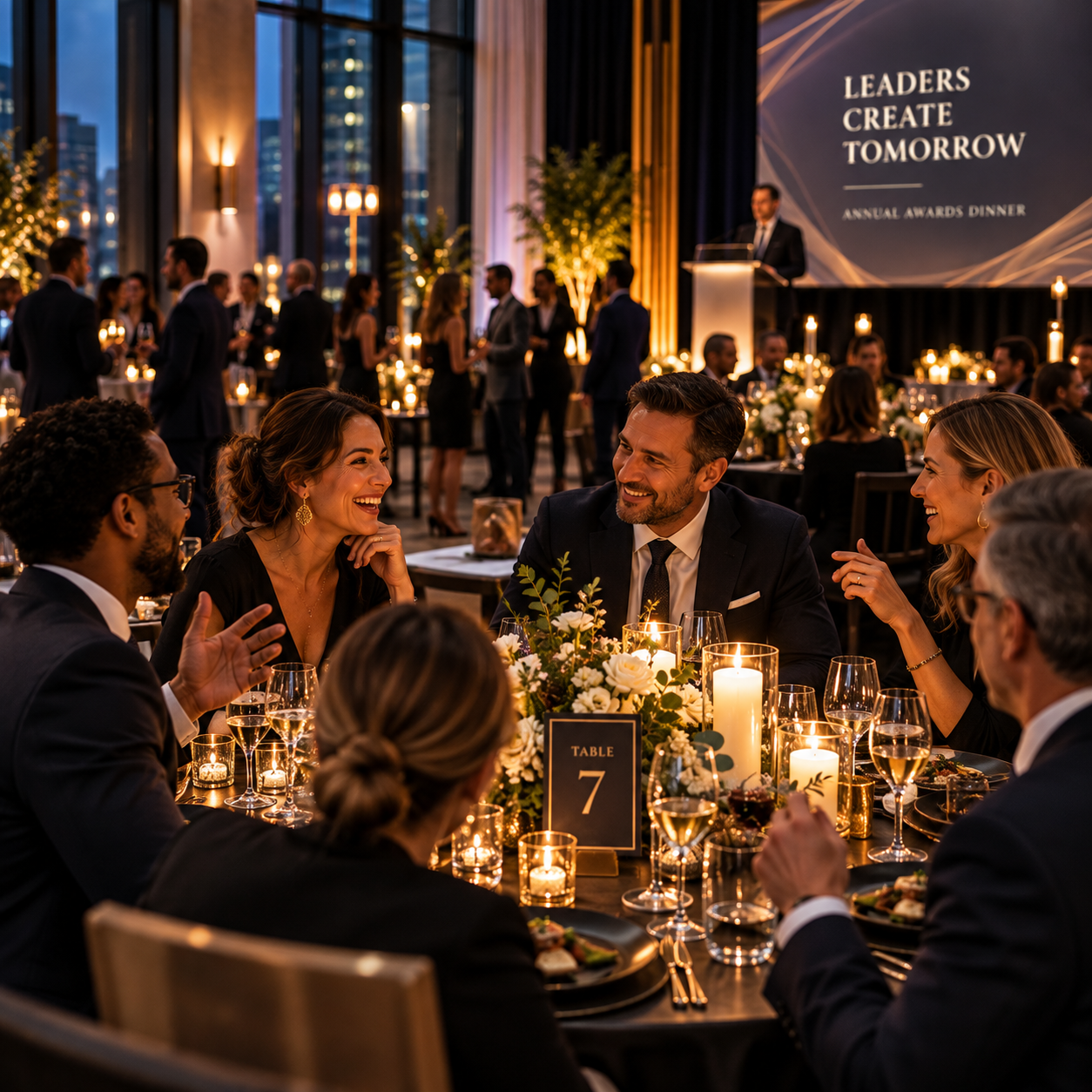
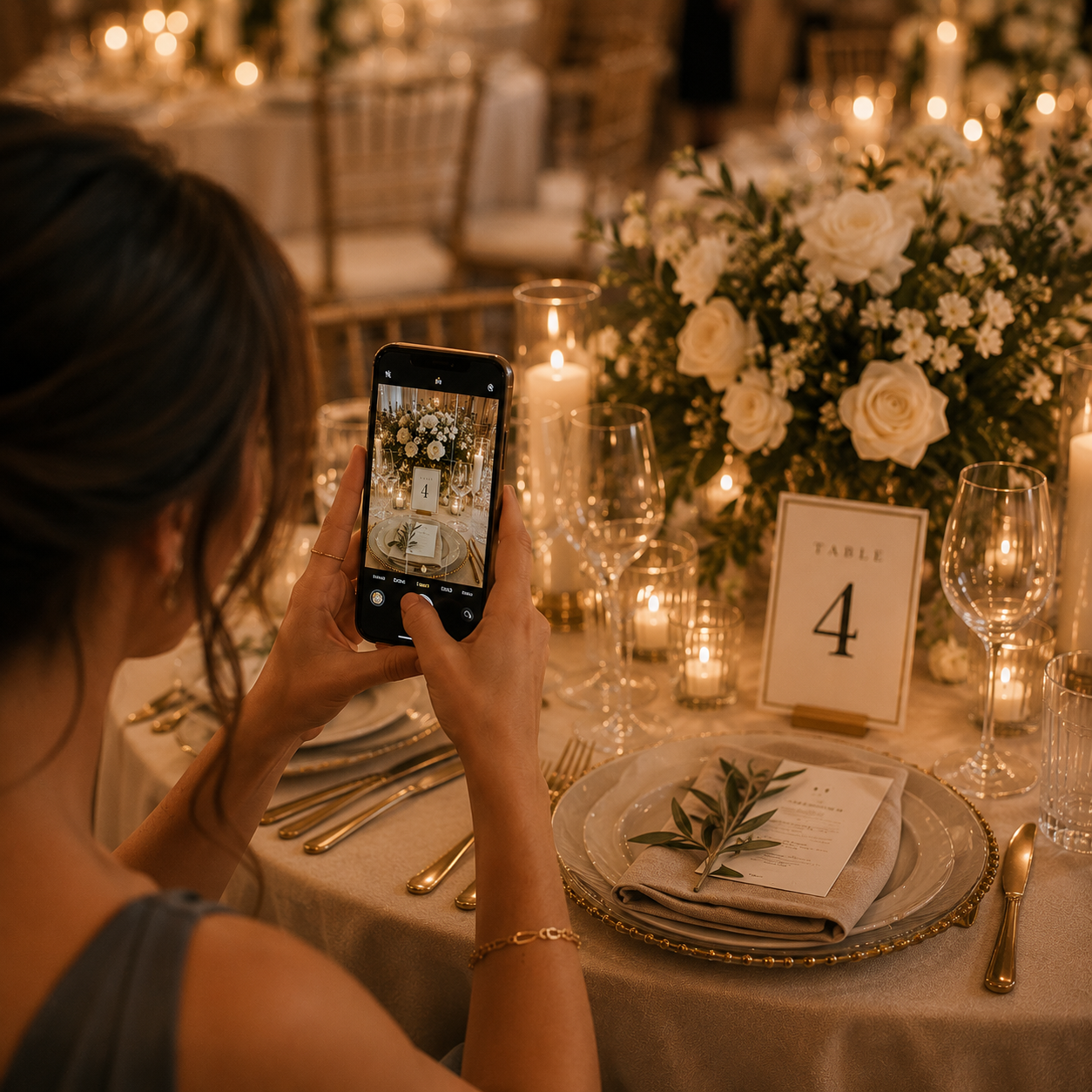
For larger dinners, clear table identification helps guests arrive without confusion while keeping the experience polished and organized.
The goal is not rigid formality.
It is effortless orientation.
“The best seating plan isn’t the one guests notice—it’s the one that creates conversations they didn’t expect.”
Turn Food and Drinks Into Part of the Story
Food Can Create Interaction
Instead of treating dinner as a pause in the event, make it part of the experience.
Consider:
- Shared family-style dishes
- Chef-led moments
- Regional menus connected to the location
- Interactive dessert presentations
- Courses designed to encourage conversation
Drinks Can Create Personality
The beverage experience can become another opportunity for connection.
Consider:
- Signature cocktails
- Elevated zero-proof options
- Curated wine pairings
- Local ingredients
- A small tasting moment
A thoughtful beverage program can feel more intentional than simply offering a standard open bar.
Recognition Should Feel Personal
Awards and recognition moments can be powerful—but only when the person receiving them feels genuinely seen.
Instead of reading a list of achievements from a stage, tell a short story.
Explain what changed because of that person.
Share a quote from a colleague.
Show a meaningful project moment.
Keep the recognition concise, specific, and human.
The difference between an award people politely applaud and one they remember is usually not production value.
It is relevance.
Create One Reason to Leave the Table
A great corporate dinner should not require guests to stay seated for three hours.
Build one or two moments into the evening that naturally encourage movement.
That could be:
A signature drink station.
A small interactive food experience.
A photo installation.
A recognition wall.
A terrace or lounge conversation area.
A live demonstration connected to the company or destination.
The activity does not need to dominate the evening.
Its purpose is to change the rhythm of the experience and create new interactions.
Polished Doesn’t Mean Formal
Keep the Polish
- Cohesive table styling
- Quality linens and materials
- Clear signage
- Comfortable lighting
- Thoughtful food presentation
- Consistent visual identity
Lose the Stiffness
- Forced networking exercises
- Excessively long agendas
- Too many speeches
- Overly rigid seating
- Branding on every surface
- Entertainment that interrupts conversation
“Modern corporate hospitality is less about impressing a room and more about making the room work.”
Let the Environment Do Some of the Work
Lighting, acoustics, seating, and room layout influence behavior long before a host says anything.
Warm lighting can make a large room feel more intimate.
A lounge can create easier conversation than another row of cocktail tables.
A private dining room can sometimes make a smaller gathering feel more premium than a much larger venue.
And spaces that allow people to choose how they participate often feel more comfortable than events where every interaction is scheduled.
Design the environment around what you want people to do.
Not simply around what photographs well.
The Details Should Support the Experience
A corporate dinner may include beautiful menus, florals, table numbers, place cards, signage, lighting, and branded elements.
But none of them should exist simply because an event is expected to have them.
Each detail should answer one of three questions:
Does it help guests navigate?
Does it improve the atmosphere?
Does it make the experience more personal?
If the answer is no, it may not be necessary.
In 2026, thoughtful events are not defined by how much is added.
They are defined by how deliberately everything works together.
Final Thoughts
A successful corporate dinner is not the one with the most impressive centerpiece or the largest production budget.
It is the one where the right people meet.
Conversation feels natural.
Recognition feels genuine.
And guests leave understanding why being there mattered.
“Don’t design a corporate dinner people attend. Design one they’re glad they didn’t miss.”
About Us
Crafted to elevate every celebration — our table numbers blend timeless design with meaningful details.